
Clinical Evidence · TempWatch
TempWatch Clinical Evidence Summary
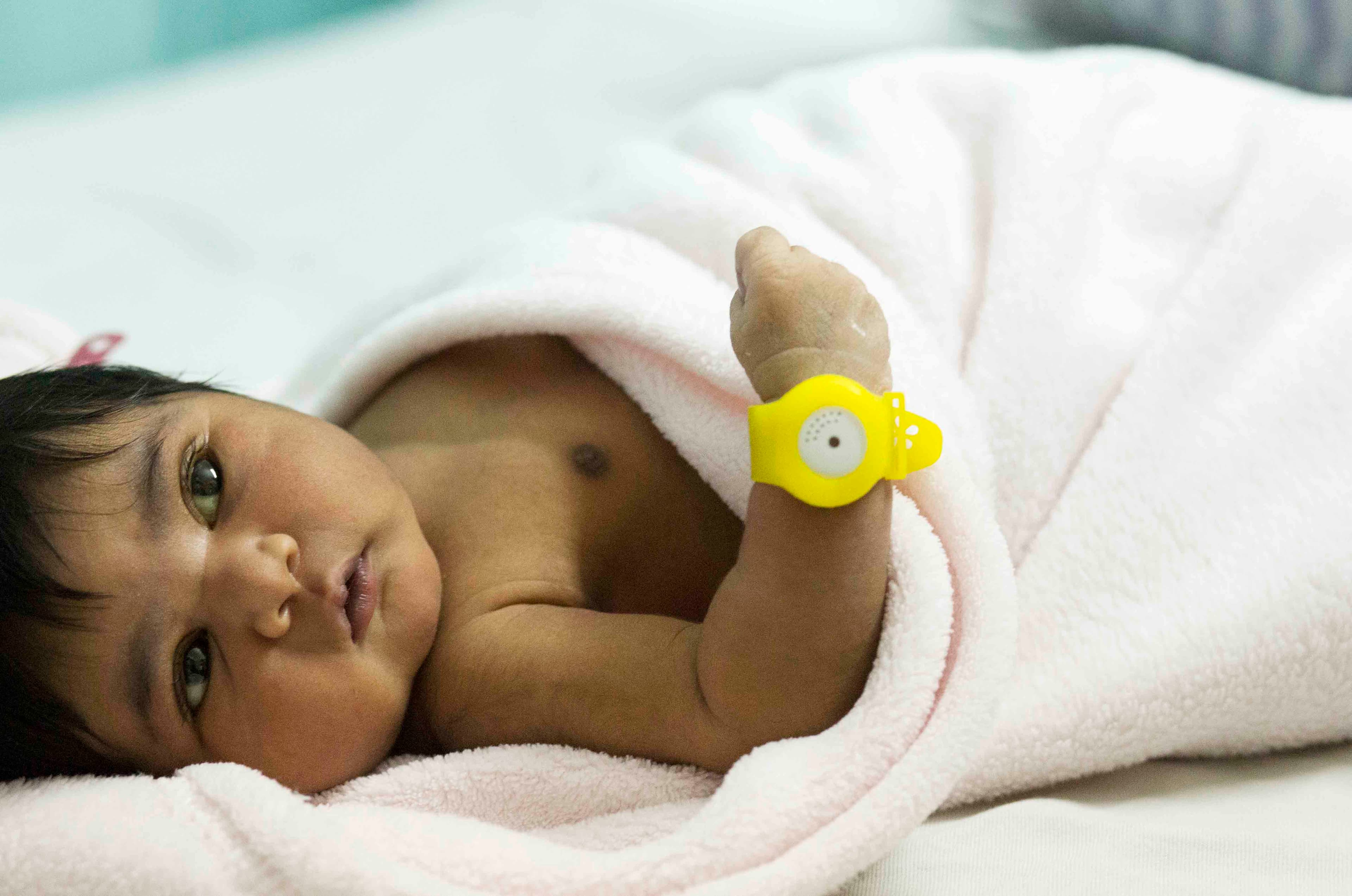
TempWatch is BEMPU's continuous hypothermia alert bracelet for newborns. Below is a summary of what independent, peer-reviewed research, government pilots, and UNICEF programme reports have found — on device accuracy, hypothermia detection, caregiver acceptance, behavioral impact, clinical outcomes, and cost-effectiveness. Every figure below links to the underlying study on our Evidence Hub.
Device Accuracy
In a study of 461 low-birth-weight neonates at JIPMER, one of India's leading government medical institutions, TempWatch readings were compared against a standard digital thermometer across 2,428 paired temperature readings. The device achieved 98.6% sensitivity, 95.0% specificity, 83.6% positive predictive value, and 99.6% negative predictive value. A separate comparative study of 100 low-birth-weight newborns at Chandaka Medical College, Larkana, Pakistan, across 1,080 paired readings found similar performance: 98.6% sensitivity, 95.1% specificity, 83.8% PPV, and 95.8% overall accuracy. A third evaluation in Ghana, across 1,973 paired readings, found sensitivity rose to 82.7% for infants not in incubators — the device's intended use case — with 95.9% specificity.
Hypothermia Detection
Continuous TempWatch monitoring has repeatedly shown that neonatal hypothermia is far more common than assumed. At KLES Dr. Prabhakar Kore Hospital, Belagavi, 96.07% of healthy full-term newborns experienced at least one hypothermic episode during the transitional period after birth. At JIPMER, Puducherry, 64.6% of low-birth-weight neonates experienced hypothermia overall (69.8% among very preterm infants). In Accra, Ghana, 85.8% of low-birth-weight infants experienced at least one hypothermic episode, rising to 100% among extremely preterm infants. And in a UNICEF Benin programme in the Zoboza health district, 75% of the 218 low-birth-weight newborns whose mothers received close follow-up experienced at least one hypothermia alert.
User Acceptance
In a community-based study in Palghar, Maharashtra, 100% of 40 ASHA community health workers and 100% of mothers surveyed found TempWatch useful for temperature monitoring. Separately, in a survey of 43 mothers of low-birth-weight infants at two Hyderabad hospitals, 100% found the device useful, and 95% said it helped with the transition from NICU to home care.
Behavioral Changes
A double-blind randomized controlled trial at Indira Gandhi Institute of Child Health, Bangalore found that babies with TempWatch received over 50% more kangaroo mother care than the control group in the first week (3.02 vs. 1.96 hours/day, p=0.016). A separate RCT at Pramukhswami Medical College, Gujarat found significantly higher KMC duration at home across all four weeks post-discharge. Reviewing the Papua New Guinea “Bebi Kol Kilok” programme, the US CDC/UNICEF evaluation found that caregivers who had not used the device showed comparatively lower knowledge, attitudes, and practices around hypothermia prevention and management than device users in focus group discussions.
Clinical Outcomes
A clinical study of 100 low-birth-weight infants at Swami Dayanand Hospital, New Delhi, found significantly higher weight gain with TempWatch (6.74 vs. 3.28 g/kg/day, p=0.039). A larger study of 515 newborns at Goa Medical College found TempWatch significantly reduced excessive postnatal weight loss (≥10% of birth weight) from 37.5% to 24.8% (p=0.001). And in a non-randomized, community-based trial across 10 health facilities in Rajasthan — published in Indian Pediatrics — the mortality rate at four weeks post-discharge was 6% in the TempWatch group versus 14% in the control group (p=0.013), a 57% relative reduction.
Cost Analysis
An independent 2020 cost-effectiveness analysis by the Duke Global Health Innovation Center, modelling TempWatch scale-up across 15 Indian states and 15 tier-1 cities from 2018–2030, found an incremental cost of $746 per newborn life saved — and just $25 per year of life saved, equivalent to roughly 1.2% of India's GDP per capita. By WHO-CHOICE criteria, this classifies TempWatch as a “very cost-effective” intervention.
Figures above are drawn directly from the peer-reviewed studies, doctoral dissertations, and UNICEF/government programme reports indexed on our Evidence Hub. Where a study reports a range or subgroup finding, the range or subgroup is noted rather than a single blended figure. No data on this page is estimated or projected beyond what the cited source itself reports.
Explore the full evidence base
Browse every published study, dissertation, and programme report behind TempWatch, KangaSling, and ApneBoot.
Visit the Evidence Hub